Energy · Wire
Ghana signs $12 billion Petroleum Hub agreement with China's TCP-UIC Consortium
Ghana has signed a $12 billion agreement with the TCP-UIC Consortium for the development of the Petroleum Hub project at Jomoro in the Western Region, marking a major step toward building one of Africa's largest petroleum refining and logistics hubs.
JoyNews
JoyNews (MyJoyOnline)
Accra, Ghana · 12 Sep 2026, 18:00 UTC · 4 min read
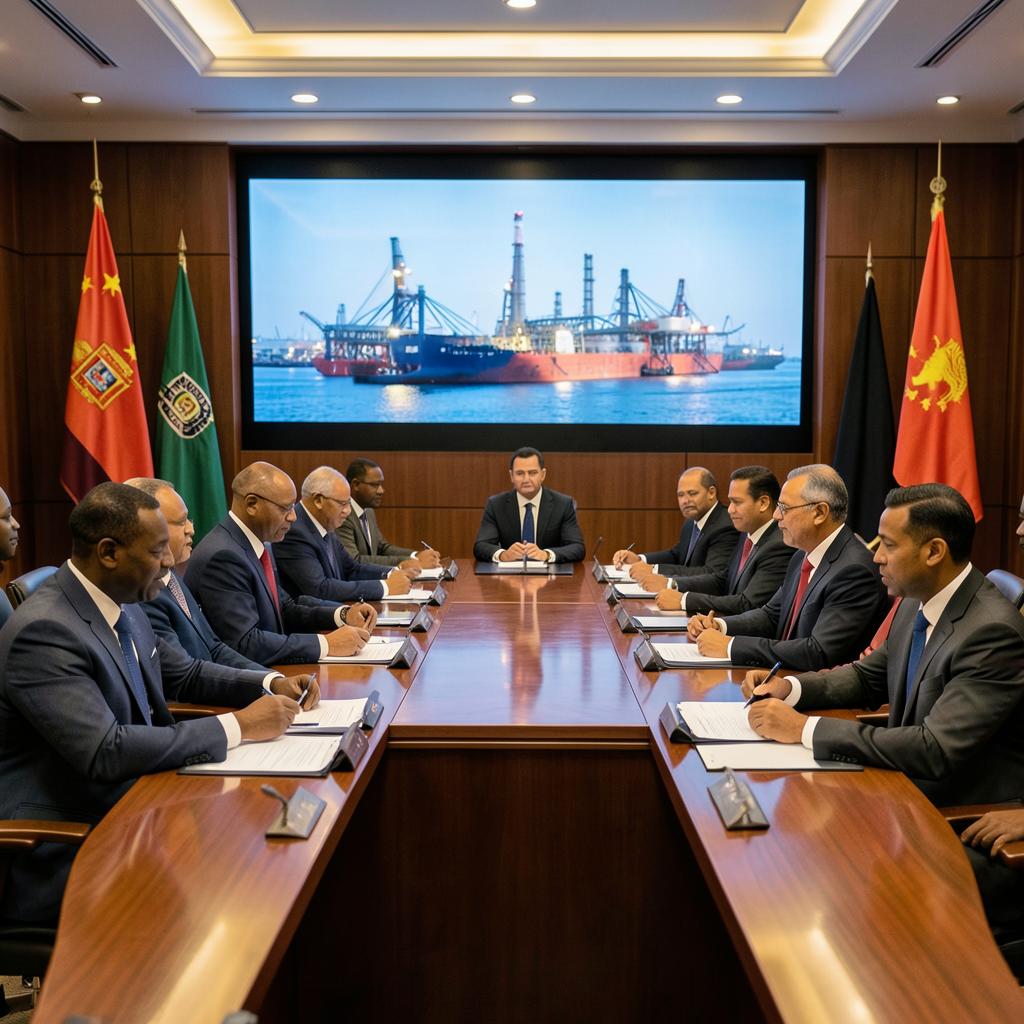
Ghana has signed a $12 billion agreement with the TCP-UIC Consortium for the development of the Petroleum Hub project at Jomoro in the Western Region, in a signing ceremony broadcast by JoyNews. The full ceremony is available to watch on YouTube [1](https://www.youtube.com/watch?v=Aule7HNuFiY).
A $12 billion commitment
The agreement commits $12 billion to the first phase of the Petroleum Hub Development, a flagship industrial project intended to position Ghana as a major petroleum refining and logistics centre for West Africa and the wider continent. The signing brings together the Government of Ghana, represented through the Petroleum Hub Development Corporation (PHDC), and the TCP-UIC Consortium, which is to provide investment, engineering and delivery capability for the hub.
What the hub will include
The Petroleum Hub is planned to include three refineries with a combined capacity of about 900,000 barrels per day, alongside petrochemical plants, large-scale storage facilities and new port infrastructure. The Jomoro site was selected for the natural depth of its shoreline, which allows larger vessels to berth compared with Ghana's existing ports at Tema and Takoradi.
Tank farms capable of storing around 10 million cubic metres of petroleum products are also planned, helping Ghana build strategic reserves that could cushion the country during global supply disruptions.
From vision to execution
The signing represents a move from strategic concept toward execution. The Petroleum Hub has been in development for several years, with land acquisition at Jomoro previously identified as the principal hurdle. The agreement with the TCP-UIC Consortium provides a framework to advance construction, financing and delivery.
The project is expected to be largely funded by private investment rather than government spending, with the state's role focused on land acquisition, community compensation and the regulatory framework. It is planned to be delivered over a multi-year period using investment models such as build-own-operate-transfer arrangements.
Jobs and the continental opportunity
The hub is expected to create a very large number of jobs. According to the PHDC, Lot One alone is projected to employ more than 30,000 Ghanaians, with up to 700,000 direct and indirect jobs projected when the hub is fully operational. The project also targets the broader African market, where the continent currently imports around 85 percent of the petroleum products it consumes.
The signing ceremony marks the transition of the Petroleum Hub from a strategic concept into a structured, deliverable investment programme.
Touchstone Media presents this report based on the JoyNews broadcast of the signing ceremony. The full ceremony can be watched on YouTube [1](https://www.youtube.com/watch?v=Aule7HNuFiY). Touchstone Media shows headlines, summaries and links only — the full broadcast remains with JoyNews and MyJoyOnline.
JoyNews (MyJoyOnline) · Published 12 Sep 2026, 18:00 UTC