Business · Touchstone Newsroom
Why the world now needs a new global ecosystem platform
Energy, water, food, infrastructure, healthcare and capital are becoming interconnected — creating a growing need for platforms that can turn country priorities into investable economic ecosystems.
Reported by Abdallah Khawaldeh
Touchstone Media Representative
London · 5 Sep 2026, 18:00 UTC · 8 min read
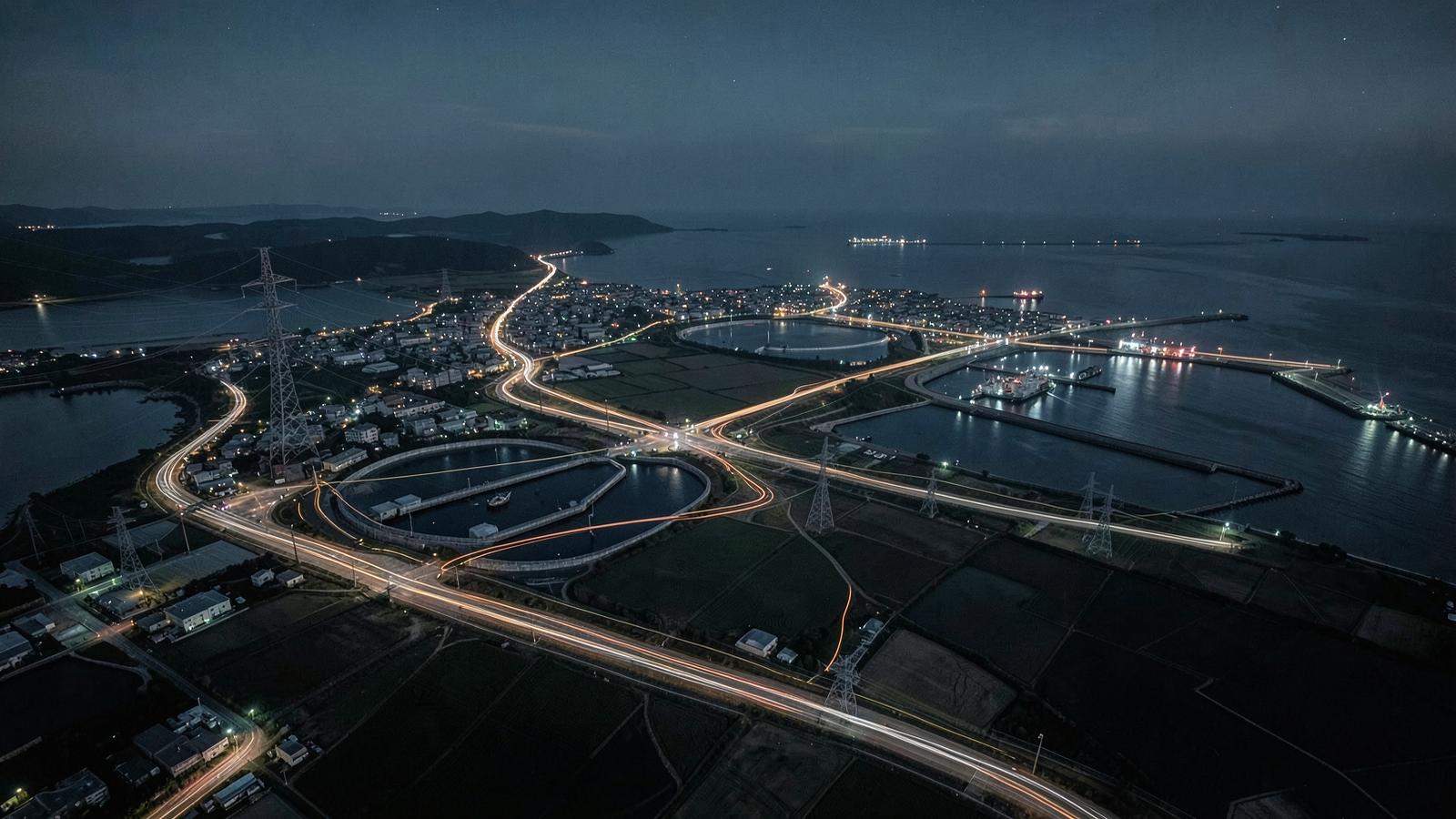
The global economy is facing a new type of challenge: not simply a shortage of capital, resources or technology, but a growing difficulty in connecting them effectively.
Countries need energy security, reliable water, food production, healthcare, housing, transport, digital infrastructure and jobs. Investors have enormous pools of capital seeking long-term opportunities. Businesses have technologies and capabilities that can help solve these problems.
Yet these elements often remain fragmented across separate projects, industries, institutions and investment structures. That fragmentation is creating an opportunity for a new generation of platforms designed to connect country development, infrastructure, investment and global markets. One such proposed model is Touchstone.
A world of connected problems
The urgency is visible across almost every major sector. The World Bank says developing economies face an investment shortfall of historic proportions and that private investment must play a leading role in expanding productive capacity, creating jobs and supporting a more sustainable and resilient future.
The World Bank's 2026 Financing for Development discussion highlighted the need to invest in water, energy, transport, digital connectivity, health and education, while mobilising private capital at much greater scale. It also noted that more than one billion young people in developing countries will reach working age over the next 10–15 years.
How can countries convert their development needs into coordinated, investable opportunities that can attract global capital?
The capital exists — but the connection is missing
The world is not without money. Global investors control enormous pools of institutional capital, while demand for infrastructure and energy investment continues to rise. BloombergNEF reported that global energy-transition investment reached a record $2.3 trillion in 2025, with electrified transport, renewable energy and grids accounting for the largest portions.
But capital does not automatically flow toward every country that needs development.
- Projects must be properly structured
- Risks must be understood
- Revenue models must be credible
- Governments need appropriate frameworks
- Investors need transparency and governance
The World Bank has repeatedly emphasised the importance of bankable projects, reliable institutions and mechanisms that can mobilise private investment. This is where an integrated ecosystem platform could become important.
Water shows the problem clearly
The World Bank's 2026 Water Forward initiative says 2.1 billion people lack safe drinking water and around 4 billion experience water scarcity. It is building country-led water compacts that combine policy, institutional strengthening, investment planning and financing pipelines, while using guarantees and blended finance to attract private capital.
Water also connects directly to other economic sectors: health, agriculture, food, energy, industry and jobs. A water project therefore should not always be viewed as an isolated water project. It can be part of a much larger economic ecosystem — precisely the type of connection the Touchstone model seeks to capture.
Food and agriculture face the same challenge
FAO estimates that transforming agrifood systems requires an additional $680 billion annually through 2030, while emphasising that investment is often fragmented across sectors and frameworks. FAO has called for tailored financing, stronger data and country ownership to mobilise private capital.
The implication is important: a country does not simply need more agricultural money. It needs a system connecting water, energy, agriculture, technology, logistics, processing, finance and export markets. When these components are developed together, an agricultural project can become an economic-development engine rather than simply another farm investment.
The Touchstone proposition
Instead of starting with a single industry, Touchstone would begin with the country. It would use Touchstone IP to assess population and demographics, natural resources, energy potential, water availability, agricultural capacity, healthcare requirements, infrastructure gaps, industrial opportunities, digital readiness, local businesses, export potential and access to global markets.
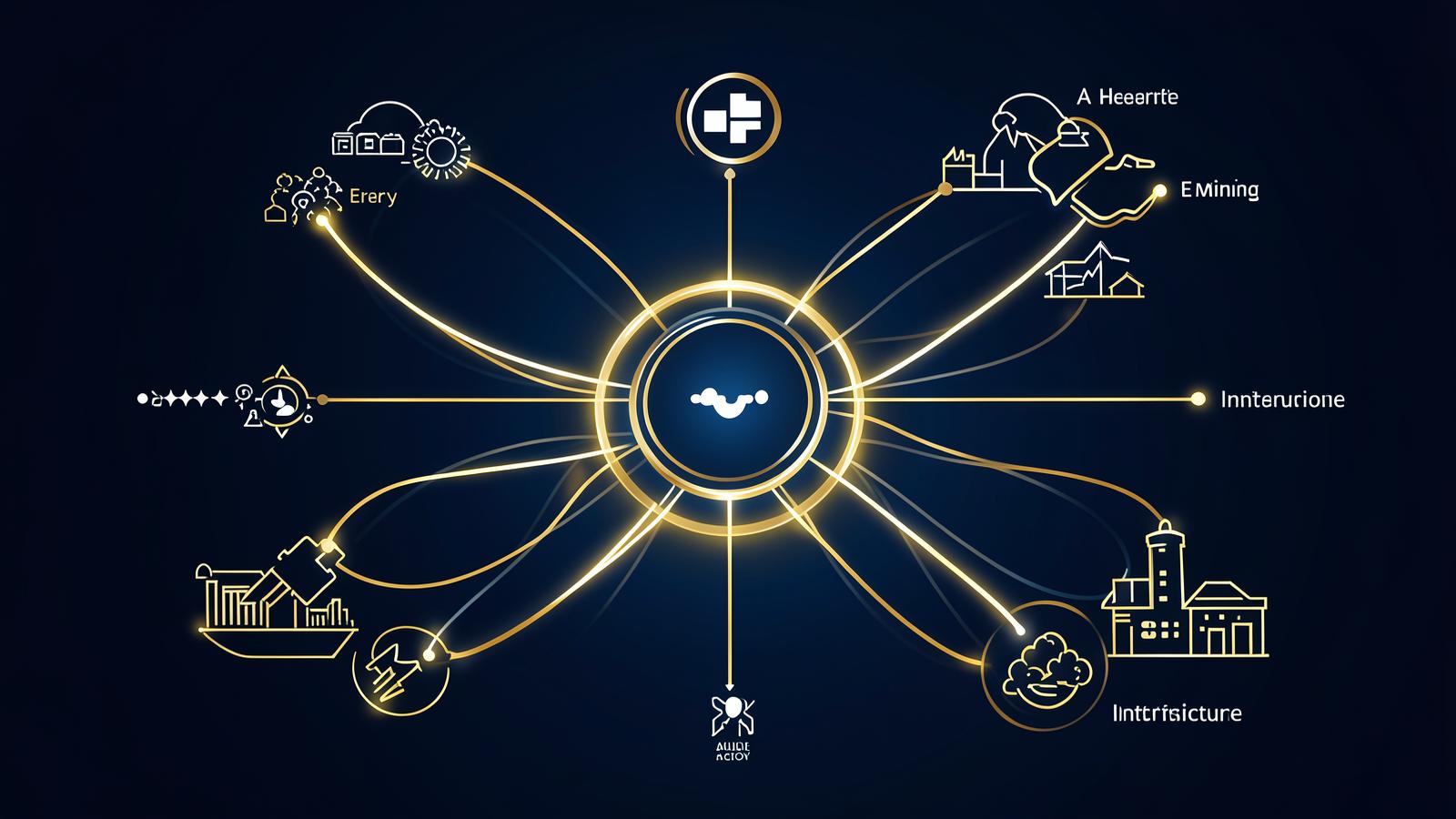
From this analysis, Touchstone would create a country-specific ecosystem blueprint: country needs feed a Touchstone country blueprint, which shapes an integrated pipeline across energy, water, food, healthcare, infrastructure and technology, then investment structuring, global capital, economic development, revenue, jobs and investor returns — with reinvestment funding the next generation of projects.
Turning projects into investment products
Touchstone would seek to aggregate projects into professionally structured portfolios that could, subject to local regulation and appropriate due diligence, support investment structures such as:
- Infrastructure funds
- Project-finance vehicles
- Green and sustainability-linked bonds
- Private equity and joint ventures
- Renewable-energy investment vehicles
- Water and agriculture investment funds
- Healthcare and infrastructure portfolios
The objective is not simply to create financial products. The objective is to make real economic development investable.
A new relationship between investors and countries
In a conventional model, an investor backs an individual project. In the Touchstone concept, an investor accesses a country ecosystem and, through it, a portfolio of projects. This potentially provides broader diversification while allowing countries to attract capital across multiple strategic sectors.
- The country benefits from infrastructure and economic development
- Local businesses gain new markets and supply chains
- People gain jobs and essential services
- Investors receive exposure to commercially structured projects
Touchstone creates value through its IP, platform, equity participation, technology, development and ecosystem services.
Why the timing matters
- Energy transition requires trillions of dollars of investment; BloombergNEF estimates roughly $235 trillion cumulatively by 2050 under its Net Zero Scenario.
- Water security is becoming a development and economic priority, with billions already experiencing scarcity.
- Food systems face a major financing gap and increasing climate and security pressures.
- Infrastructure remains constrained by limited public budgets and insufficient private investment.
- More than one billion young people in developing economies are expected to reach working age over the next 10–15 years.
These challenges are occurring at the same time. That is why a fragmented sector-by-sector approach may become increasingly inefficient.
From global capital to local impact
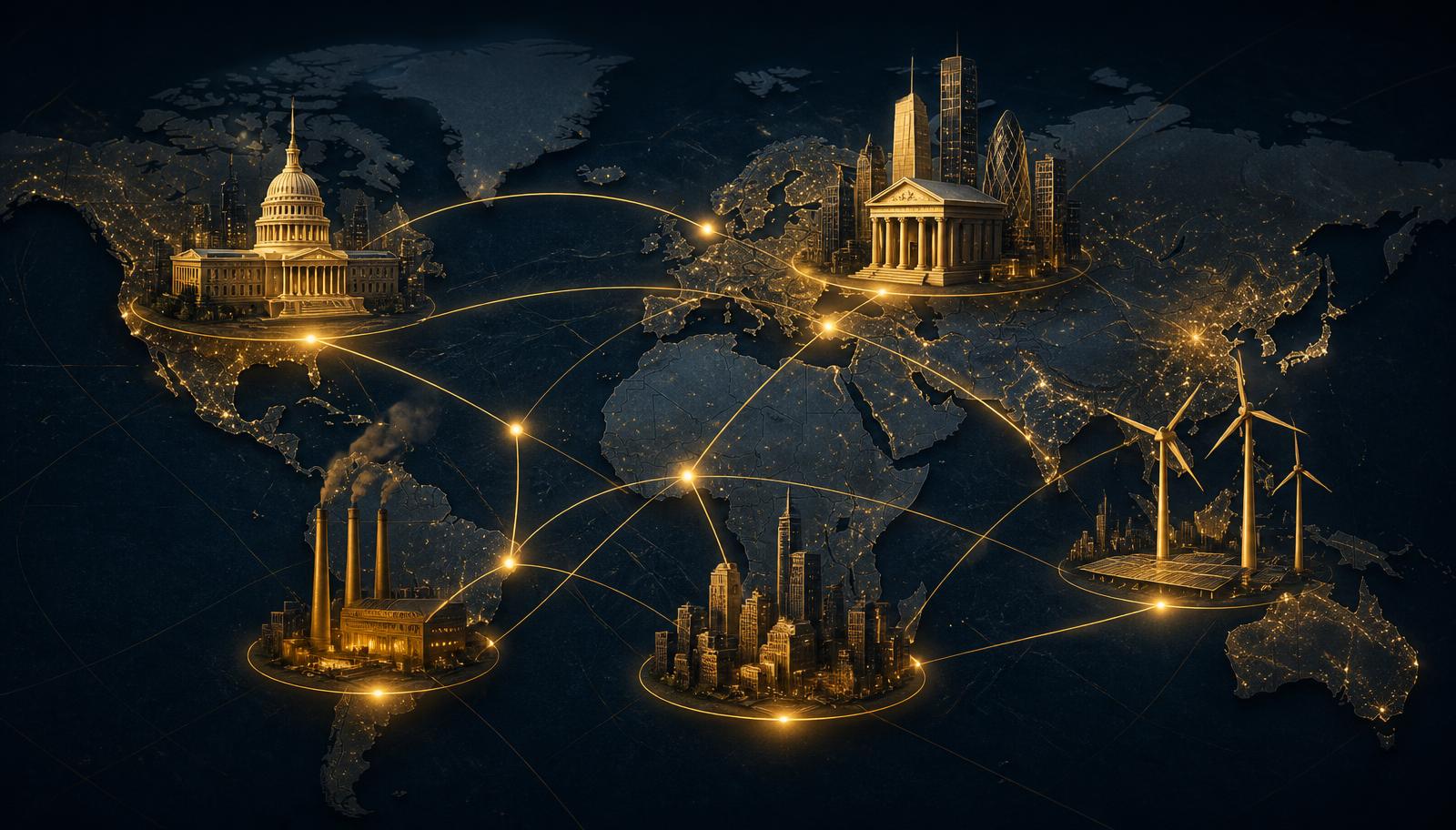
The opportunity is therefore not simply to become another large multinational company. Touchstone's potential role would be to act as a bridge between global capital and country-level development: global IP into a country ecosystem platform, working with local government, businesses and technology partners, feeding an integrated project pipeline and investment platform that draws institutional, sovereign, strategic and private capital into country development and global trade.
The model could then be repeated across different countries while adapting the ecosystem to local conditions.
The bigger opportunity
The world may not need another company that simply owns more assets. It may need platforms capable of organising the assets, capital, technology and institutions already available into more productive systems. The world's challenge is not only finding capital; it is turning capital into coordinated development at scale.
If successfully executed, the ambition would be to create a new category of global business — a country ecosystem and capital-mobilisation platform designed to build integrated economic systems rather than isolated projects. The opportunity is substantial. The execution challenge is equally substantial.
Build the ecosystem around people. Make development investable. Connect countries to the world.
Touchstone Newsroom · Published 5 Sep 2026, 18:00 UTC